
Raising Pigs on Pasture is Good for Everyone
October 7, 2025
Why Choose 100% Grass-Fed Beef — and All the Delicious Ways to Grill It
February 9, 2026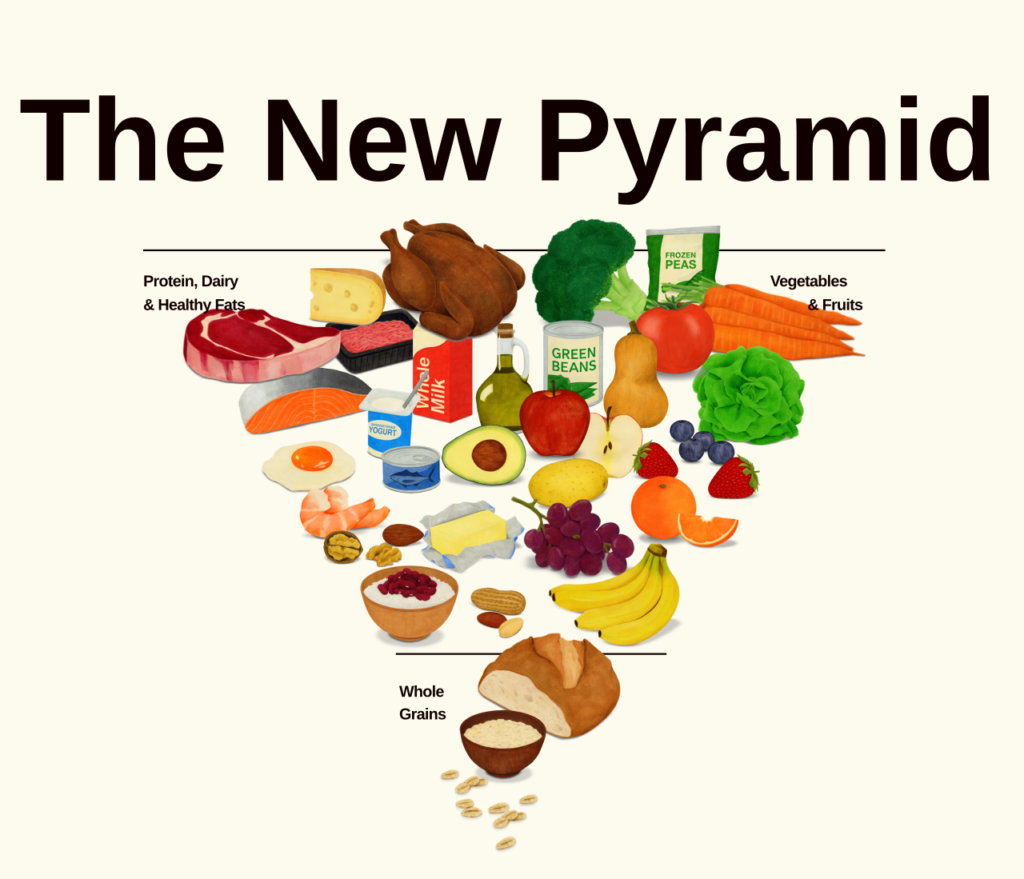
For decades, the food pyramid shaped how Americans thought about nutrition. Heavy on grains, light on protein, and nearly silent on food quality, the original model left many consumers confused—and often undernourished. Today, nutrition science has evolved, and so has the way we think about building a healthy plate.
The “new” food pyramid (and similar modern dietary models) shifts the focus from quantity to quality. Instead of simply asking how much we eat, it asks what kind of food we are fueling our bodies with—and where it comes from.
From Grains to Real Foods
Modern dietary guidance emphasizes:
- Whole, minimally processed foods
- High-quality protein sources
- Healthy fats
- Plenty of vegetables and fruits
- Fewer refined carbohydrates and added sugars
This shift recognizes that not all calories—or proteins—are created equal. The source and production method of our food matters, both for human health and environmental sustainability.
Protein Takes a Central Role
High-quality protein is now recognized as a cornerstone of a balanced diet. Protein supports:
- Muscle development and maintenance
- Immune function
- Hormone production
- Satiety and healthy weight management
Among protein sources, beef remains one of the most nutrient-dense options available—especially when it is 100% grass-fed.
Why 100% Grass-Fed Beef Matters
Not all beef is the same. The way cattle are raised has a direct impact on the nutritional profile of the meat.
100% grass-fed beef from Wisconsin Meadows offers several key benefits:
- Higher Omega-3 Fatty Acids
Grass-fed beef contains significantly more omega-3s, which support heart and brain health. - Improved Omega-6 to Omega-3 Ratio
A more balanced fat profile helps reduce inflammation in the body. - Rich in Essential Nutrients
Grass-fed beef is an excellent source of iron, zinc, B vitamins (especially B12), and conjugated linoleic acid (CLA), a fat linked to metabolic health. - No Added Hormones or Routine Antibiotics
Grass-fed cattle are raised naturally, aligning with consumer demand for cleaner, more transparent food systems.
A Better Choice for the Land
The new food pyramid doesn’t just consider human health—it also acknowledges environmental responsibility. Properly managed grass-based systems:
- Improve soil health
- Support wildlife habitat
- Enhance biodiversity
- Capture and store carbon in the soil
Grass-fed beef production works with nature, not against it, making it a sustainable protein choice when sourced responsibly.
Building a Modern Plate
In today’s food pyramid, a healthy plate might look like:
- Plenty of vegetables and fruits
- Healthy fats from whole foods
- Whole or minimally processed carbohydrates
- High-quality protein like 100% grass-fed beef
Rather than eliminating red meat, modern nutrition encourages choosing better meat—raised with care, respect for the animal, and stewardship of the land.
The Bottom Line
The new food pyramid reflects a return to common sense nutrition: real food, raised well, eaten in balance. Wisconsin Meadows 100% grass-fed beef fits naturally into this approach, offering a nutrient-dense protein that supports human health, rural communities, and sustainable farming practices.
Choosing Wisconsin Meadows grass-fed beef isn’t just a dietary decision—it’s a vote for better food, healthier people, and a more resilient food system.